

Age-old elixir tea
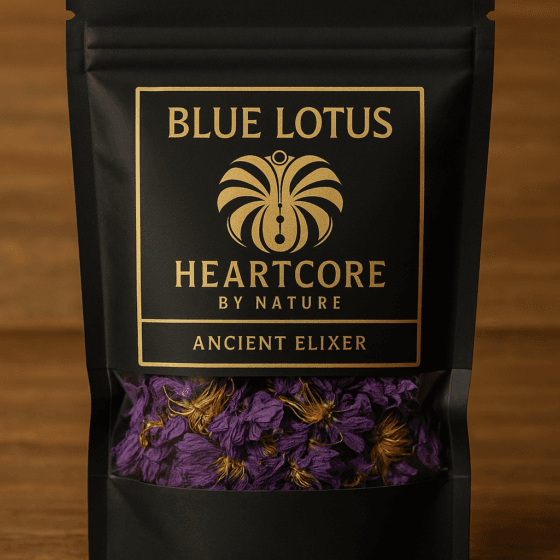
Blue Lotus Flowers
What is blue lotus (Nymphaea Caerulea)?
Blue Lotus, scientifically known as Nymphaea Caerulea, is a water lily that originally grows along the banks of the Nile in Egypt. The flower holds a special place in the history of ancient Egypt and can be found on temple walls.
For thousands of years the Blue Lotus has been surrounded by a mysterious aura. According to historical accounts, the flower was used during religious ceremonies and important gatherings. It was highly valued by the ancient Egyptians and grew into one of the most iconic plants of their civilisation. To this day, the Blue Lotus still captures the imagination of people around the world.
The active compounds in blue lotus:
- Apomorphine — acts on the dopamine receptors and causes a feeling of euphoria and wellbeing
- Nuciferine — has a calming and relaxing effect, promotes lucid dreaming
- Antioxidants — protect the cells and support the immune system
- Flavonoids — anti-inflammatory and calming for the nervous system
The interplay of these compounds makes blue lotus unique: it combines relaxation with heightened awareness, without the numbing you may experience with other calming plants.
Blue lotus, an age-old elixir for intuition and dream awareness
Blue lotus (Nymphaea caerulea) is a mystical plant with a history going back centuries. In ancient Egypt this beautiful flower was revered as a symbol of enlightenment, ecstasy and rebirth. Blue lotus opens you to the subtle worlds of feeling, intuition and inner peace.
This ethereal plant helps you sink into the now, open the gateway to your dreams and surrender to a state of clear softness. It works at the interface of consciousness and mysticism, like a bridge between the earth and starlight.
Relax, open up and trust the power of this plant
Blue lotus invites you to slow down. To gently release the layers of thinking and sink into your body and your being. It calms, relaxes and softens, while your senses awaken and your world of feeling opens up. Many people experience a subtle euphoria, creative flow or deep meditative state. Others notice that their dreams become more vivid. Blue lotus is not a shortcut, but a gentle guide that accompanies you in a whisper.
Use blue lotus in your ritual
This plant can be used in different ways: as tea, in an infusion, smoked or in an oil. What counts is your intention. Make the moment something special, your moment. Light a candle. Set your stress aside and take the time to feel. Let the energy of the plant work with you – without haste, without a goal. Blue lotus is not there to solve something, but to invite you into a different state of being: calm, receptivity, connection.
Choose pure, ceremonial quality
Our blue lotus is harvested with love and care in its natural habitat. The flowers are picked by hand, dried at low temperature and packed with attention, so that the soul of the plant is preserved.
You do not receive a standard product, but a living and age-old elixir.
Feel called by the magic of blue lotus
The call of blue lotus comes softly, but powerfully. If you feel you are ready to open up to your dreams, your intuition and a deeper connection with yourself, then listen to her whisper.
Order your Blue Lotus at Heartcore by Nature and let the ritual unfold. Let yourself be carried by the mystery.
How do you prepare blue lotus?
Blue lotus can be prepared and used in different ways. Here are the most common methods:
As tea (most traditional)
- Use 3 to 5 grams of dried blue lotus flowers per cup
- Heat water to about 80°C — not boiling, this preserves the active compounds
- Let the flowers steep for 10 to 15 minutes
- Strain out the flowers and drink slowly
- Optional: add honey or lemon for flavour
As an elixir (concentrated)
Our blue lotus elixir is a concentrated form that you can take directly or add to water or tea. Ideal if you are looking for a stronger experience or don’t want to prepare the flowers.
In combination with cacao
Blue lotus and ceremonial cacao complement each other beautifully. The heart opening of cacao combined with the dream awareness of blue lotus creates a deep, meditative experience. Add a few drops of elixir to your cacao ceremony.
When do you use blue lotus?
Evening ritual — for deep relaxation and vivid dreams
- Meditation — for heightened awareness and inner stillness
- Creative work — for inspiration and free flow of thought
- Ceremony — as part of a larger ritual practice
Nymphaea caerulea: the plant behind blue lotus
Blue lotus is the common name for Nymphaea caerulea, also known as the blue Egyptian water lily. Botanically it is not a true lotus but a water lily from the Nymphaeaceae family. That distinction is more than a detail: the true or sacred lotus, Nelumbo nucifera, is a different plant from a different family, with its own tradition in India and Southeast Asia.
The plant originally grows along the banks of the Nile and later spread across East Africa, India and Thailand. The flower floats on the water, opens in the morning and closes in the course of the afternoon. The blue-violet petals with their yellow heart made the plant one of the most recognisable images of ancient Egypt.
Where the differences lie
- Nymphaea caerulea — blue lotus. Blue-violet flower, the variety we offer and that is traditionally used as tea and in rituals.
- Nymphaea lotus — the white lotus, a related water lily with a different flower shape and its own traditional use.
- Nelumbo nucifera — the sacred or Indian lotus. A different family, larger leaves that rise above the water, known from Buddhism and Hinduism.
Of the blue lotus, mainly the flower is used. With us you buy dried blue lotus flowers and a concentrated elixir. Those who want to keep the plant itself should go to an aquatic plant nursery; we focus on the dried flower for tea and ritual use.
Blue lotus in ancient Egypt
Few plants are depicted as often on Egyptian temple walls and burial chambers as the blue lotus. You find the flower in reliefs, on columns, in the hands of priests and around banquets. When the tomb of Tutankhamun was opened, dried petals of the plant were found.
That prominent role had everything to do with the rhythm of the flower. It opens at sunrise and closes again as the day withdraws — for the Egyptians a direct echo of the solar cycle and thus of death and resurrection. The flower was associated with Nefertem, the deity said to have been born from the primordial lotus.
From finds and texts we know that the flowers were steeped in wine and used at ceremonial gatherings. It was not an everyday product but a plant with a place in ritual and symbolism. It is precisely that background that still makes blue lotus attractive today for those who want to use the plant in their own ritual or meditation.
Blue lotus tea: taste, experience and storage
Tea is the most traditional way to use blue lotus and also the way most people start. Above you will find the preparation step by step; here it is about what you can expect.
What does blue lotus tea taste like?
Soft and floral, with an earthy undertone and a light sweetness reminiscent of honey. The taste is mild — it is not a herbal tea that demands attention. If you let the flowers steep too long or too hot you get a bitter undertone; so stay around 80 °C and keep it to ten to fifteen minutes. A little honey or lemon goes well with it.
What people describe
Experiences that users themselves mention are a feeling of calm, a soft focus and more vivid dreams when the tea is drunk in the evening. These are descriptions by users and not a promised effect: how the plant works for you depends on dosage, moment and person. Blue lotus is not a medicine and we make no medical promises about it.
When you use it
- In the evening — the most chosen moments are before sleep or as a closing of the day.
- With meditation or yoga nidra — as a calm companion to a quieter moment.
- Together with ceremonial cacao — a widely used combination. The heart opening of ceremonial cacao alongside the dreamy side of blue lotus.
Storage
Dry, dark and airtight. Dried flowers then keep their colour and aroma for well over a year. If the flowers discolour or the scent disappears, the quality has deteriorated. Do not store them in the fridge: moisture is the biggest enemy.
In which forms can you buy blue lotus?
Blue lotus comes in different forms, and which one suits you depends on how you want to use it.
Dried whole flowers
The most traditional form and our recommendation to start with. You see exactly what you are buying: whole flowers with preserved colour. Suitable for tea, for a ritual bath or to place on an altar. When buying, look for whole, deeply coloured flowers with a clear aroma — brown, crumbled flowers are old or poorly dried.
Petals
Loose petals steep faster and are easier to weigh. Practical if you mix blue lotus with other herbs.
Elixir or extract
A concentrated form that you take directly or add to water or tea. Ideal if you don’t want to prepare flowers or are looking for a stronger experience. Because it is concentrated, you start low here.
Not sure? Start with dried flowers as tea. That is the gentlest introduction and the way the plant has been used for centuries.
Responsible use and points of attention
Blue lotus is fully legal in the Netherlands and Belgium and does not fall under the Dutch Opium Act. Regulations may differ in other countries; check your local rules before ordering. That does not mean it can be used without attention. We only sell to persons aged 18 and over.
- Start low. Three grams per cup is a calm start. See how you react before using more.
- Do not combine with alcohol or other substances that act on the nervous system.
- Not during pregnancy or breastfeeding.
- Not in traffic or when operating machinery. Some people experience drowsiness.
- Do you take medication or have a medical condition? Then consult your doctor or pharmacist first.
Blue lotus is a botanical product for tea and ritual use. It is not a medicine, it is not intended to prevent or treat diseases, and we make no health claims about it. If in doubt whether it suits you, err on the side of caution and ask for advice.
Frequently asked questions about buying blue lotus (FAQ)
1. What is blue lotus?
Blue lotus (Nymphaea Caerulea) is a beautiful water lily that has been used in Egypt for centuries. It is known for its relaxing, spiritual and dreamy effect.
2. Is blue lotus legal?
Yes, blue lotus is fully legal in both the Netherlands and Belgium, and in most other countries. Check your local regulations if in doubt. You can safely buy and use blue lotus for tea, rituals or meditation.
3. In which forms can I buy blue lotus?
You can buy blue lotus as dried flowers, tea or extract. Each has its own use: from a gentle tea to a concentrated ritual extract.
4. How do you use blue lotus?
Traditionally blue lotus is mainly used as tea. You can steep the flowers in hot water, or dilute an extract. Some people also use it in ceremonial rituals.
5. What should I look out for when buying blue lotus?
Always choose high-quality blue lotus from a reliable source. At Heartcore by Nature you buy authentic Nymphaea Caerulea, carefully selected and delivered quickly.
8. Is blue lotus the same as the sacred lotus?
No. Blue lotus is Nymphaea caerulea, a water lily. The sacred or Indian lotus is Nelumbo nucifera, a different plant from a different family. The names get mixed up, the plants do not.
9. Where does blue lotus originally come from?
From the banks of the Nile in Egypt. Later the plant spread to East Africa, India and Thailand. The flower can be found on Egyptian temple walls and was found in the tomb of Tutankhamun.
10. What does blue lotus tea taste like?
Soft and floral with an earthy undertone and a light honey sweetness. Don’t let the flowers steep too hot or too long, or the tea becomes bitter.
11. How do I store blue lotus and how long does it keep?
Dry, dark and airtight. That way dried flowers keep their colour and aroma for well over a year. Do not store in the fridge; moisture is the biggest enemy.
12. Can I combine blue lotus with ceremonial cacao?
Yes, that is a widely used combination. See our ceremonial cacao for the options.
13. From what age do you sell blue lotus?
We only sell to persons aged 18 and over.
Why buy blue lotus at Heartcore by Nature?
- Authentic Nymphaea Caerulea — straight from the original growing area of the sacred blue lotus
- Carefully dried — at low temperature to preserve all active compounds
- Ceremonial quality — picked by hand and processed with intention
- Several forms — available as dried flowers, tea and elixir
- Experience and knowledge — Heartcore by Nature has worked with plants for years and knows the effect of blue lotus from the inside
- Shipped discreetly and fast — ordered before 15:00, shipped the same day
- Free shipping — within the Netherlands from €55

WIGGERT MEERMAN: The rapé and cacao are of good quality and come from an honest source, driven by passion for indigenous traditions.

Amandina Almeida: I recently started using Blue Lotus in my ritual. It gives me calm, helps me relax and makes for a pleasant start to the day. Sometimes I combine it with the cacao from Heartcore by Nature. That combination feels very pleasant to me: more clarity, relaxation and balance. Grateful to have discovered this.
Looking for other sacred products?
Besides Royal Rapé we also offer various other products and ceremonies. View them via the buttons below.